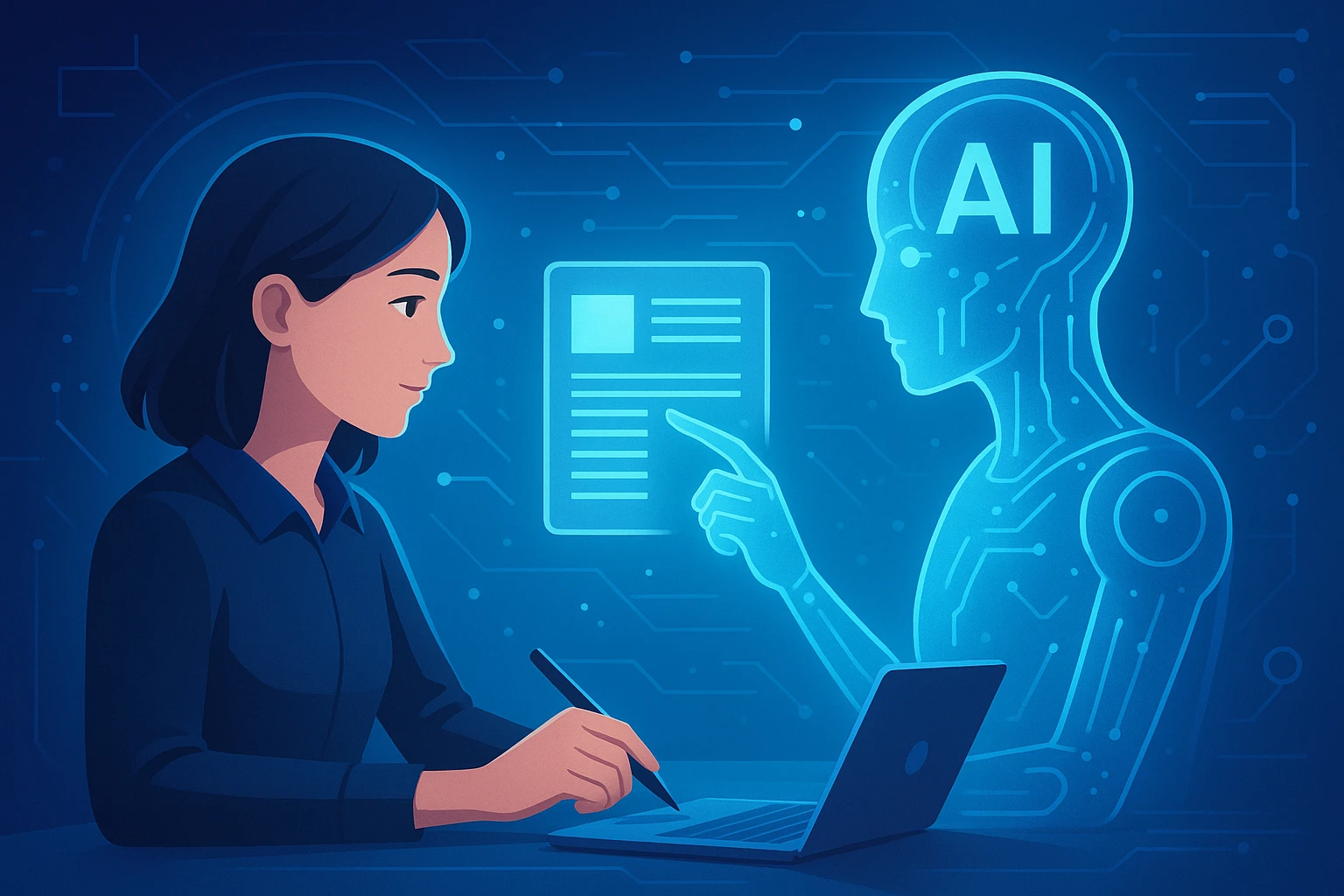
Resumes Are About to Change
For a long time, a resume was basically a list of jobs, degrees, and a few nice words about yourself. That still matters, but I think we’re moving toward something bigger.
Very soon, people will not only be asked what they can do, but also how they work with AI. And honestly, that makes sense. AI is already showing up in emails, reports, research, planning, design, and even content creation.
The future resume will not just describe experience. It will also show how well someone can think, guide, and collaborate with AI tools.
I’ve noticed that the people getting the best results are not the ones who “know AI” in a vague way. They are the ones who know how to ask better questions, give clear instructions, and turn a rough tool into something useful.
Why Working Well With AI Matters
AI is not replacing every job, but it is changing how work gets done. That means the ability to use AI well is becoming part of being a capable worker, student, or business owner.
Think of AI like a very fast assistant. It can help a lot, but it still needs direction. If the direction is unclear, the result is often messy, generic, or just plain wrong.
Good AI collaboration saves time, reduces stress, and helps people work smarter. Instead of staring at a blank page, you can get a starting point. Instead of spending an hour rewriting a message, you can draft it in minutes and improve it.
This matters in school too. A student who knows how to use AI to brainstorm ideas, explain a concept, or organize notes has a real advantage. Not because they’re cheating the system, but because they’re learning how to use a modern tool responsibly and effectively.
Everyday Ways People Already Use AI Well
AI collaboration does not have to be complicated. In daily life, it can be as simple as asking for a meal plan based on what’s in your fridge, or turning a long article into a short summary you can actually use.
In the workplace, people use AI to draft emails, prepare meeting notes, and outline presentations. A manager might ask it to turn messy bullet points into a clear update. A freelancer might use it to rewrite client copy in a friendlier tone.
In school, AI can help with study plans, essay outlines, and quick explanations of hard topics. It is especially useful when you want to understand something in plain language before going deeper.
In business, AI can help with product descriptions, customer replies, and brainstorming marketing ideas. A small business owner does not need to do everything alone anymore. They can use AI as a partner to move faster.
The pattern is always the same: the better the direction, the better the result. That is why AI skill is becoming less about the tool itself and more about how you communicate with it.
Why Prompting Is the Real Starting Point
Prompt engineering sounds technical, but at its core it is simple: learning how to ask AI for what you actually need. That includes giving context, setting a goal, and being clear about the format you want back.
This is the foundation of AI collaboration. If you can explain a task clearly, the AI has a much better chance of helping you well. If you can’t, you waste time fixing vague or useless answers.
Good prompts are not about using fancy words. They are about clarity. For example, “Write me an email” is weak. “Write a polite follow-up email to a client who missed our meeting, keep it brief, and sound professional” is much stronger.
That small difference changes everything. It turns AI from a guessing machine into a useful assistant.
I’ve seen this happen over and over: once people learn the basics of prompting, they stop blaming the tool and start getting real value from it.
Why This Skill Will Matter for Everyone
Some skills are nice to have. Others become part of everyday survival in the workplace. Prompt engineering is heading toward the second group.
Future employers will care about results. If AI helps you work faster, think more clearly, and produce better output, that is valuable. It does not matter whether you are in marketing, sales, education, operations, or running your own business.
People who can guide AI well will have an edge. They will save time, communicate better, and adapt faster when tools change. That is exactly the kind of flexibility modern work rewards.
It is also a confidence skill. Once you know how to ask better questions, you stop feeling stuck. You start using AI as a practical helper instead of a confusing gadget.
The sooner you start learning this, the easier it will be to keep up as AI becomes more common in everyday work. What feels optional today may feel basic tomorrow.
Start Learning It Now
The main lesson is simple: prompt engineering is not a niche trick. It is the beginning of a new kind of digital literacy.
If you want to stay useful, adaptable, and confident in the future of work, this is a skill worth building now. You do not need to become an expert overnight. You just need to start practicing how to communicate clearly with AI.
That is where real progress begins. Not with perfect tools, but with better questions. Not with hype, but with a habit of working smarter.
People who learn this early will have a much easier time using AI well later on. And once you get the hang of it, you’ll probably wonder how you ever worked without it.
Where to Begin
The best way to improve is to use a simple framework and practice it often. Start with one task you already do in real life, like writing an email, planning a lesson, drafting a post, or organizing your week.
Then ask AI for help in a clearer, more specific way. Try a few versions, compare the results, and notice what changes when you give better instructions.
That habit will teach you more than random experimentation ever could. And it will make AI feel less mysterious and much more useful.
Once you understand the basics, the rest starts to click into place.
Leave a Reply