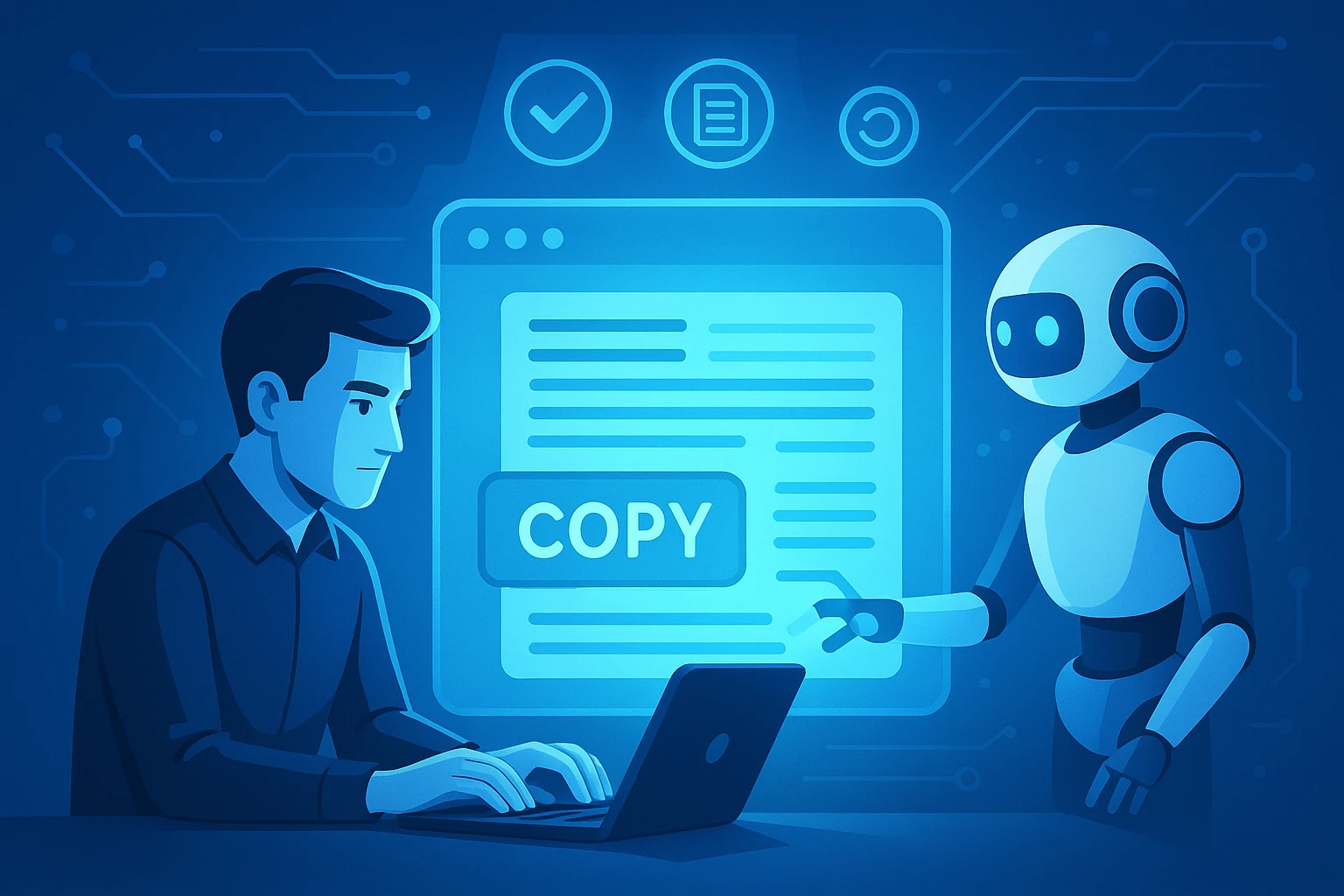
The quiet frustration of doing the same admin work again and again
If you’ve ever spent half an hour reformatting a document, rewriting the same email for the fifth time, or sorting notes that should have been clear in the first place, you already know the feeling. It’s not hard work in the dramatic sense, but it drains your energy in a sneaky way.
The worst part is that this kind of work often looks productive. You are busy, your inbox is moving, your files are cleaner, and yet at the end of the day you may feel like you didn’t really create anything new. That is the kind of work AI is starting to change.
Repetitive admin is not disappearing overnight, but the amount of it a person needs to do by hand is going to shrink fast. And once you see that shift clearly, it becomes obvious why learning to give good instructions matters so much.
How AI is already taking over the boring middle
Most people think of AI as something that writes essays or answers questions. In real life, the more useful version is much less flashy: it helps with the boring middle steps that slow you down.
It can summarize long messages, rewrite rough drafts, turn scattered notes into a clean list, and help create a first version of something you still need to review. In other words, it does the part that usually eats time, not the part that requires your judgment.
I’ve seen people go from spending an hour cleaning up one task to spending ten minutes checking an AI draft instead. That does not mean the person becomes less important. It means their time goes toward decisions, not typing and tidying.
The real shift is from doing every step yourself to directing the steps well. That is a very different skill, and it is becoming more useful every month.
Everyday tasks that can get much smaller
Think about the kinds of jobs people repeat all the time. Many of them do not need fresh thinking every single time. They just need a clear start.
Email replies are one obvious example. If you often answer the same question from clients, coworkers, or customers, AI can draft a polite response in seconds. You still choose the tone and check the facts, but you are not starting from zero.
Meeting notes are another. Instead of reading through a messy page of ideas, AI can turn them into action items, key points, and next steps. That makes it easier to remember what matters.
School work can benefit too. A student can use AI to make a study outline from class notes, simplify a hard paragraph, or create flashcards from a chapter. The student still learns the material, but the setup is much faster.
Small business tasks are often a good fit as well. A shop owner can use AI to draft product descriptions, organize customer questions, or create a basic content plan. The work still needs a human voice, but the blank page problem gets a lot smaller.
Content creation is especially affected. Writers, marketers, and creators are already using AI to brainstorm ideas, outline posts, and reshape rough drafts into something easier to publish.
The skill that makes AI actually useful
Here’s the part people miss: AI is only helpful when it understands what you want well enough to produce something useful. That means the better you explain the task, the better the result usually is.
Clear instructions beat vague ones. A prompt like “help me with this email” is weak. A prompt like “rewrite this email so it sounds friendly, short, and professional for a client who missed a deadline” gives the AI a much better chance of helping.
Context matters too. If you tell AI who the message is for, what the goal is, and what tone you want, you save time later. You also avoid getting something generic that sounds fine but does not fit the situation.
Repeatable processes are easiest to improve. The more a task follows a pattern, the easier it is to describe. And once you can describe it well, you can ask AI to help with it again and again.
This is why prompt skill is not some fancy tech hobby anymore. It is becoming a normal part of getting things done.
Why people who explain workflows well will get ahead
In the future, a big advantage will belong to people who can take a messy task and say, “Here is how this should work.” That is true in offices, classrooms, small businesses, and creative work.
People who can explain a workflow can speed it up, improve it, and hand parts of it to AI. People who cannot explain it clearly will keep doing more by hand, even when they do not need to.
That does not mean you need to become a tech expert. It means you need to get comfortable saying things like: what the task is, what the goal is, what the tone should be, what to avoid, and what the final result should look like.
The better you are at describing work, the more work you can automate. That is true now, and it will matter even more later.
My honest advice is simple: start learning this before you feel forced to. The people who practice now will not just use AI faster. They will use it more creatively, more confidently, and with far less friction.
The future will not reward the person who does the most copy-paste by hand. It will reward the person who knows how to turn a messy task into a clear instruction.
Leave a Reply