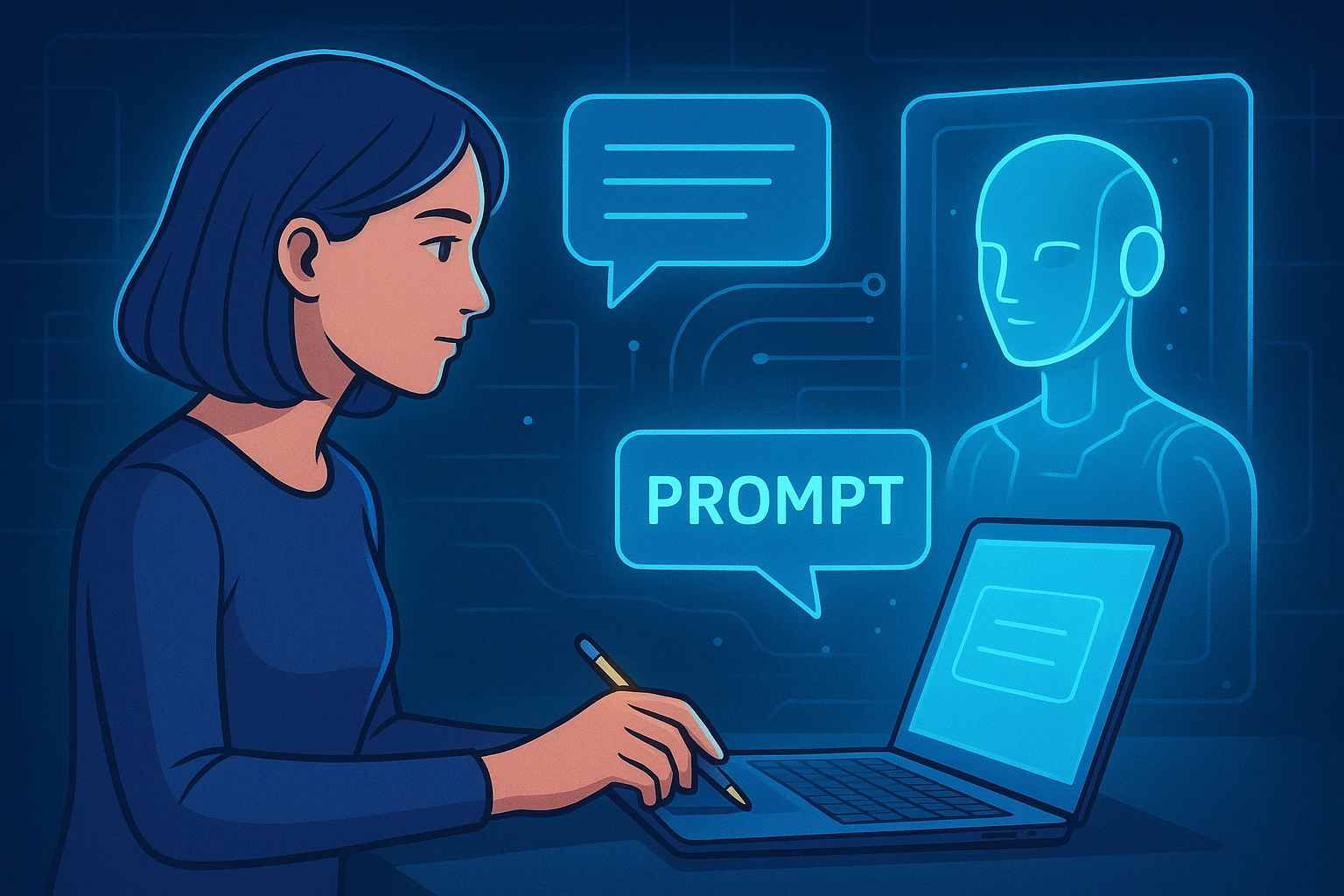
AI Works Better When You Treat It Like an Assistant
I still remember the first time I used an AI tool and expected it to “just know” what I wanted. I typed a few words, hit enter, and got something vague, stiff, and honestly not very useful.
That was the moment I realized something important: AI is not a mind reader. It works much more like a very fast assistant who is waiting for clear directions.
Think about asking a coworker for help. If you say, “Can you handle this?” you may get something technically done, but probably not in the way you needed. If you give a simple, specific brief, the result gets much better.
Prompt engineering is really just that idea, but for AI. It is the skill of telling the assistant what you need, in a way it can actually use.
What a Useful Brief Really Includes
A good brief does not have to be long or fancy. In fact, the best ones are often short, clear, and practical.
When I write a prompt, I try to include a few basics: what I want, who it is for, the tone I need, and the format I want back. That alone can change the quality of the answer a lot.
For example, if I want help writing an email, I do not just say “write an email”. I explain the purpose, the person receiving it, and whether I want it to sound friendly, professional, or firm.
The more useful the brief, the less correcting you have to do later. That is the part people miss at first. They think prompt writing is about clever wording, but it is really about giving the assistant enough context to do a good job.
Once you start thinking this way, every AI tool becomes easier to use.
Here is a simple structure that helps in everyday situations: task, context, constraints, and output format. You do not need to memorize those words. You just need the habit of being clear.
Why “Bad Prompt vs Good Prompt” Changes Everything
Let’s make this real. Imagine you are asking AI to help with a school project or a work task.
A bad prompt might be: make this better. That is too open. The AI has no idea whether you want simpler language, a shorter version, a more persuasive version, or a cleaner structure.
A more useful prompt would be: Rewrite this for a school presentation for 14-year-olds. Keep it simple, friendly, and under 150 words.
See the difference? The second prompt gives the assistant a clear job. It knows the audience, the style, and the length.
That is the whole game. Not magic. Not tricks. Just better instructions.
Here is another example from business. A weak prompt might be: Give me marketing ideas. That can lead to random answers that sound impressive but are not practical.
A better version would be: Give me 5 low-cost marketing ideas for a small bakery that wants more local customers. Keep them realistic for a one-person team.
Specific prompts create specific answers. Broad prompts create broad, often disappointing answers.
In my experience, the moment people start writing clearer prompts, they feel like the AI “got smarter.” Usually, it did not get smarter. The brief just got better.
Where This Skill Helps in Everyday Life
This is not only for tech people or content creators. It helps in normal life more than most people expect.
If you are a student, you can ask AI to explain a topic in simple words, create study questions, or turn messy notes into a clean outline. If you are working, you can use it to draft emails, summarize meetings, or organize your ideas before a presentation.
For small business owners, it can help with product descriptions, customer messages, social posts, and even brainstorming offers. For parents or busy people, it can help plan meals, sort schedules, or write a message you do not have time to overthink.
The useful part is not that AI does the work for you. The useful part is that it helps you work faster, think more clearly, and start with a better draft.
That is why prompt skill matters across so many different tasks. The more people use AI, the more valuable it becomes to know how to guide it well.
If you can explain what you want clearly, AI can become a real daily helper instead of a confusing toy.
Prompt Engineering Is the Skill Behind Good AI Results
The biggest mistake I see is people treating AI like a search box. They type a few words and hope for brilliance.
But AI works best when you give it a usable brief. That is what prompt engineering really means: learning how to ask in a way that gets useful answers.
You do not need to become an expert overnight. You just need to practice the habit of being clear, adding context, and saying what “good” looks like.
That skill will matter more and more as AI becomes part of daily work, school, business, and content creation. People who know how to direct AI will save time, make fewer mistakes, and get better results with less effort.
Start now, while the skill is still easy to learn. The people who get comfortable with prompts early will have a real advantage later.
In the future, knowing how to brief AI well will feel less like a bonus and more like a basic life skill.
Your prompt is the brief. AI is the assistant. And prompt engineering is simply the habit of giving that assistant what it needs to help you properly.
Leave a Reply