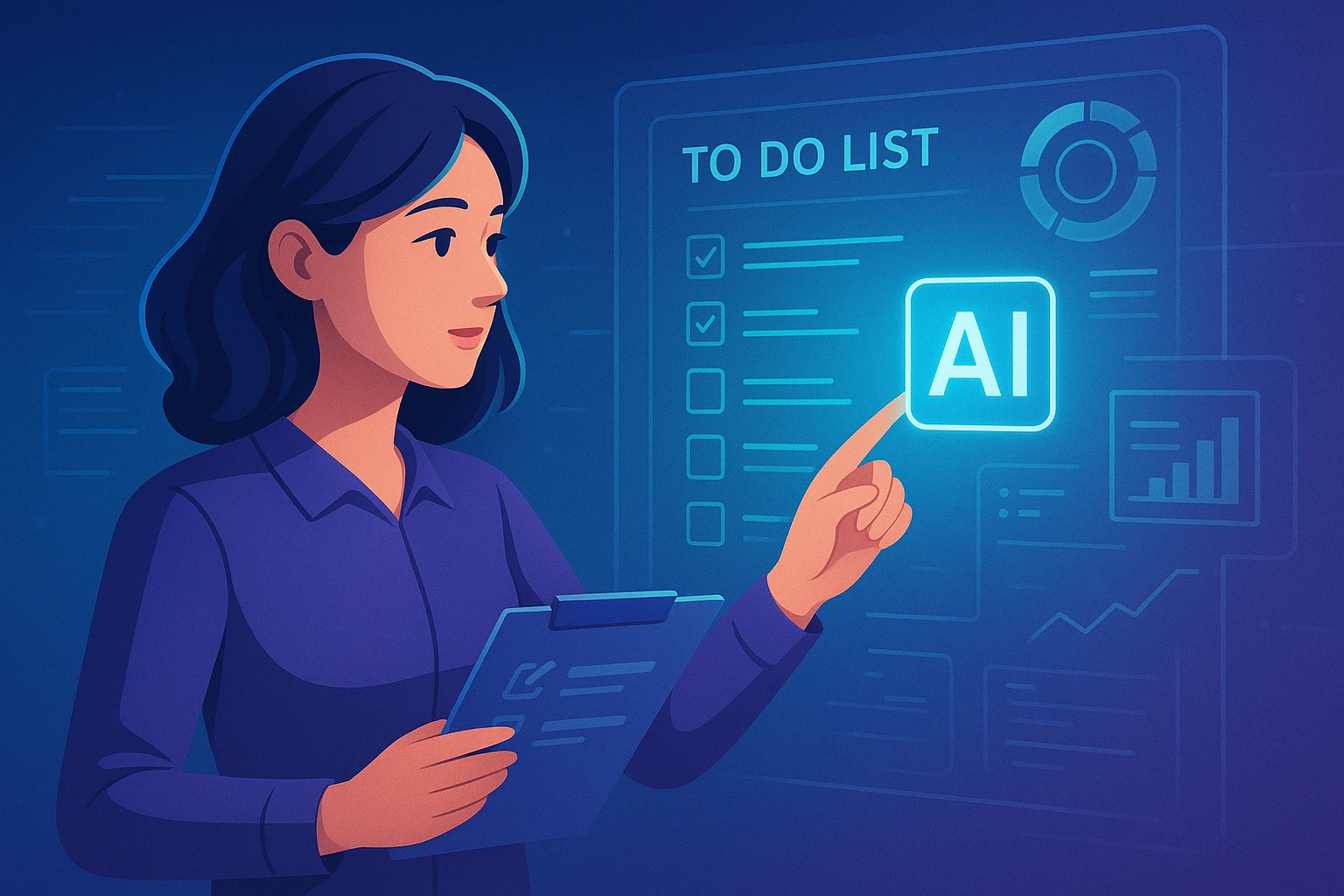
Why Work Feels So Full of Tiny Tasks
If you look closely at a normal workday, it is often not one big project that drains you. It is the small stuff: rewriting the same message, finding a better headline, sorting notes, summarizing a long email, or trying to remember what you were supposed to do next.
These manual micro-tasks quietly fill the day. They are not difficult on their own, but together they steal time, attention, and energy. I used to think being productive meant doing all of them myself, one by one.
Now it is becoming clear that the people who keep doing every tiny step manually will feel slower and more overloaded. The real advantage is shifting from doing everything to directing what gets done.
From Doer to Director
This is the biggest change happening right now. In the past, a lot of value came from being the person who could complete tasks quickly and carefully. That still matters, but it is no longer the full story.
Today, the better skill is often knowing what to ask for, how to ask for it, and how to improve the result. Instead of spending an hour on a first draft, you may spend five minutes guiding an AI tool, then ten minutes checking and polishing the output.
That is a very different kind of work. You become less like a worker following a checklist and more like a project director for digital help. And honestly, that role is going to matter in jobs, school, business, and content creation.
Where AI Can Already Help in Everyday Work
You do not need a special setup to start. AI tools can already help with everyday tasks that most people do repeatedly.
Writing is one of the easiest examples. You can ask for a draft email, a social post, a class reflection, or a product description. The first version may not be perfect, but it gives you a starting point instead of a blank page.
Summarizing is another huge time-saver. If you have a long meeting transcript, a research article, or a messy set of notes, AI can turn it into the main points in seconds. That means less time reading and more time deciding what matters.
Planning also becomes easier. You can ask for a weekly study schedule, a content calendar, a simple launch plan, or a list of steps for a project. A good tool can help you see the path more clearly when your own thoughts feel scattered.
Researching is useful too, especially for beginners. Instead of staring at ten browser tabs, you can ask for a comparison, a list of options, or a plain-language explanation of a topic. That does not replace your judgment, but it makes the starting point much easier.
The Skill That Makes AI Actually Useful
Here is the part many people miss: AI is only as helpful as the instructions you give it. If you ask something vague, you usually get a vague answer. If you ask clearly, you get something much more useful.
This is why prompting matters. A prompt is just the instruction or request you give the tool. It is not about sounding clever. It is about being specific enough that the AI understands what you want.
For example, “write me an email” is too open-ended. But “write a polite email asking for a deadline extension because I was sick, and keep it under 120 words” gives the tool a real target. Clear instructions save time and improve results.
You do not need to know any coding. You need to learn how to explain your goal, add useful context, and say what good output looks like. That is a future-ready skill because every AI tool depends on it in some form.
How to Give Better Instructions Without Overthinking It
The easiest way to improve is to think like you are giving directions to a smart assistant who cannot read your mind. Start with the task, then add the details that shape the result.
Try including the goal, the audience, the tone, and the format. If you want a social caption, say who it is for. If you want study help, say the level you need. If you want a business reply, mention the style you want, such as friendly, firm, or professional.
You can also ask for options. For example, “Give me three versions” or “Make this shorter and simpler.” That is often where the magic happens, because you are not accepting the first draft as final. You are guiding the result step by step.
The people who learn this early will feel calmer, faster, and more in control. They will not be trapped by the tool; they will know how to shape it.
Why the Fastest Adapters Will Have an Advantage
The future will not belong only to people who know the most. It will belong to people who know how to work with smart tools well. That includes students, employees, founders, freelancers, and creators.
Someone who can clearly direct AI will be able to move quicker, test ideas faster, and spend more time on judgment and creativity instead of repetitive effort. That is a serious advantage when deadlines are tight and attention is limited.
Prompt engineering is becoming a basic life skill. It will help with work emails, school assignments, marketing, brainstorming, customer support, and even personal organization. The sooner you get comfortable with it, the less overwhelming the shift will feel.
So if your current to-do list looks full of tiny chores, that is exactly why this matters. The future is moving toward people who can guide systems, not just grind through tasks. And the earlier you start learning how to do that, the easier it will be to keep up.
Leave a Reply